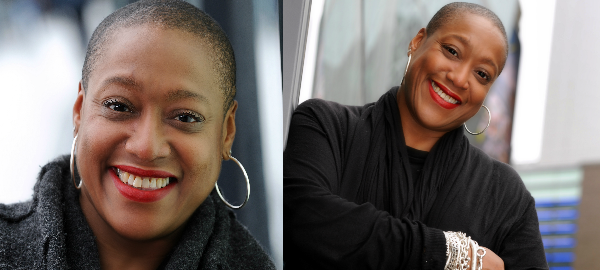
Interview with Paulette Randall
Paulette Randall is one of this country’s most successful female theatre directors. She has already made history as associate director for the London 2012 opening ceremonies alongside Danny Boyle, and as the first black woman to direct a play in the West End, August Wilson’s Fences in 2013. Yet despite her theatrical pedigree and solid reputation, she is not as well known as she deserves to be.
Born in Brixton to Jamaican parents, Randall originally trained as an actress at Rose Bruford College of Speech and Drama, but writing was also a passion. After graduating, she set up the Theatre of Black Women with Bernardine Evaristo and Patricia Hilaire in response to the lack of roles for black actors. Since then she has shown great versatility. Randall has produced TV comedies, such as Desmonds, The Real McCoy, Porkpie and The Crouches, been artistic director at Talawa Theatre Company and has directed numerous well received plays spanning a 30 year career. Now penning her first musical, Randall explains to Joy Francis why she has no plans to leave the UK arts scene, how she copes with being overlooked, her passion for August Wilson and why being a creative isn’t a “stroll in the park”.
You are on record as saying you are “probably the most famous writer, director, producer, female British Jamaican director we’ve never heard of”. Do you still feel this is the case?
Even though I have been working in theatre and TV for 30 years or more, I’m still not recognised in the same way my white peers are. It is down to a number of things. One is that this is what I have chosen to do as a career, and after a bit of hard work I’m rather good at it, but unfortunately that doesn’t seem to be enough. Another is that the industry itself is precarious and being freelance, there are times when you are not working, but you don’t dwell on that aspect of it. It is really important that certain stories are told. We are the guardians of the culture, so we have to have different voices reflected, so I have to stay in the UK.
When were you first attracted to the arts and why?
I had forgotten about this until recently, but when I was at school I used to write sketches that we used to do in assembly. I didn’t think of it as a possible option that I would be paid for. When I decided to go drama school, it [Rose Bruford College of Speech and Drama] was the only one I applied to as I wasn’t sure if it was what I wanted. My friend had bet me a fiver that I wouldn’t apply for the course, so I did. When I arrived for the audition, which was all day, I thought, this might be the place for me – and it was. It was a theatre for all different communities which felt more up my street. It had a social conscience. After the first year, which I found quite tricky, I thought: this is my world.
Despite your acting training, everyone knows you as a director, playwright and producer. Why the transition?
I’m naturally curious and like trying different things. The moment I think I’m getting bored, I’ve got to try something else. In my final year at drama school I had already started writing plays.
The London 2012 opening ceremonies attracted global praise. You were the associate director alongside Danny Boyle, who you first worked with 32 years ago at the Royal Court when he directed your award-winning play Fishing. How was it working together again after so long, and on a production of that scale?
It was fantastic. In terms of Danny, it didn’t feel like any time had passed between us. The only difference was that our working relationship was much more equal this time. Neither of us had done an opening ceremony on that scale before. We put our combined skills into the pot and made it. It was pleasurable and scary.
The multicultural theme was both applauded and criticised, which meant it made an impact. How conscious a decision was it to make it prominent, and were you and Danny on the same page?
It was an absolutely conscious decision from the get go. It was about telling the truth. When people watch the film Notting Hill, it is not true.
You directed Lenny Henry and Tanya Moodie in August Wilson’s Fences at the Duchess Theatre in the West End, the first black woman to do so. After being in the creative industries for so long, how does that accolade sit with you?
On one hand, it’s a really nice place to be. I’m good and I should be in the West End. But it is absolutely disgusting that I’m the first black woman to do so. And it’s not because people haven’t tried. When people ask me if there is any racism or sexism in the theatre, I say absolutely. It is a microcosm of society and the rest of the world. It’s really annoying, for no other reason that I can do this job and have been doing it for 30 years, but for some reason they don’t want me. It’s a horrible feeling but I’m not going anywhere so they have to deal with it.
Have you been tempted to go and work anywhere else over the past 30 years?
No. There is too much work to do here. I understand as an actor Hollywood is the pinnacle, but it’s not the case for directors or writers. We have got so many stories still to tell. There is too much to do.
You’ve now directed six of Wilson’s 10 play Pittsburgh Cycle and aim to do them all, with the playwright’s approval. What is it about Wilson as a writer of the African American experience that has captured your passion and attention?
I didn’t know anything about him when I did my first play of his work, The Piano Lesson. I was sent to New York to meet this amazing Pulitzer Prize winning man. I said to him, I have to make a confession. I have never seen any of your work. He said – I don’t really go to the theatre that much myself. I was blown away by that. When I got to know him a bit more I got to understand what he was trying to achieve with his plays. They are so brilliantly written you’d be crazy not to want to do them all. The stories are so specific, which make them universal.
You’ve been friends with Lenny Henry for two and a half decades. He now has his eponymous plan to ring-fence a minimum amount of money for BAME productions, which is the touchstone for the current debate on diversity in the arts and media. How do you feel about it?
It goes back to what I said before. If we are going to tell the truth of a situation, and the truth is that we have been here a hell of a long time, it’s just about being equal. I remember going to meetings at the Africa Centre years ago when the [equality] debate was raging. It’s about getting power, so I totally agree with what Lenny’s doing. There was a recent meeting at Act for Change. People were saying we should have representation, which makes me smile because when we do anything, we have to be integrated. From their perspective, we always have to be inclusive yet they don’t. For me, it’s about getting equality.
Your time at Talawa Theatre Company was fruitful and highly praised. Do you miss it?
I’m not very good in an office so I don’t miss that aspect of it at all. I miss the fact that I could decide what I wanted to do and did it. As a freelance, it is more cat and mouse, but I’m being more proactive. I’m now saying, I want to do this play in your building. How about it? That approach is going down alright at the moment.
What are you working on or planning to work on?
I‘m attempting to write a musical. I wanted to do something about my childhood and London in the 60s, but seen in a different way. Back then the music was fantastic. I can’t imagine doing something about my childhood without music in it. Saturdays were very important musically, with get-togethers and partying. As you get older, you can see why it was so important to our parents to go out and eat, drink and dance. At those times, everything else just disappears and you can just have the time of your life. I’m hoping to complete it by next year.
What advice do you have for budding actors, writers, producer and directors of colour?
Be honest and brave. Yours are the voices we need to hear and are meant to listen to. Work on your self-belief. It’s so difficult because you are constantly challenged, so you have to know who you are and trust that you have the absolute right to be where you are and have the right to do what you want to do as this career choice is not a stroll in the park. Keep the people you love and who love you close. Don’t be afraid to tell people when you are hungry. Let them know that at this point, things are not great. They will feed you.
Picture credit: Sharron Wallace