Stripping back the layers of publishing
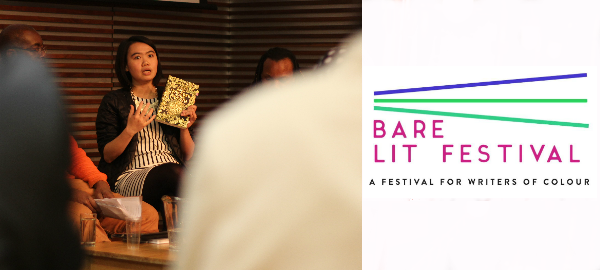
Writers of colour at Bare Lit talked identity, self definition and visibility. Picture credit: Nylah Khan
Media Diversified’s inaugural literary festival for writers of colour, Bare Lit, gave me a lot to consider. It made me rethink everything I thought I already knew about literature, publishing and race. After attending all of the panels, and some performances, during the festival weekend, I saw three emerging themes laced through the debates: job titles, acceptance and identity.
I attended the festival keen to discover new authors of colour, with stories connected to far away continents, especially poets as I love spoken word artists. What I came away with was a complete u-turn in how writers of colour define.
Such as performance poet Hibaq Osman and Malika Booker, who both read aloud their wonderful work at the Betsey Trotwood. They admitted that although they often get labelled as “performance poets”, they have always referred to themselves as “page poets”. Anthony Anaxagorou, poet and artistic director of Out-Spoken, went as far as to say that he hated the term “spoken word” because of the unnecessary differentiations it created for the art form.
While speaking to Dean Atta about his poetry anthology, he asked if I was a new consumer of poetry. After listening to Booker, Osman and Anaxagorou, I had to answer in the affirmative, suddenly aware of the distinction between his title as poet and that of the self-proclaimed spoken word artists I had been following for the last eight years.
Negative reactions to their ideas was another concern. From Leila Aboulela on the first panel to Anaxagorou in the penultimate session, writers spoke of gravitating towards fiction as it created less of a backlash against their content.
Aboulela spoke of writing articles for newspapers online on topics such as the hijab, only to be unfairly abused below the line, compared to the acceptance she felt for her works of fiction covering the same subjects. According Anaxagorou, his poem ‘You’, written following the Charlie Hebdo attacks in France, largely received acceptance. Yet his tweets making the same points as in the poem were accused of “defending terrorists”.
Academic Joan Anim-Addo highlighted the wider impact the under-representation of ethnic minorities at every level of publishing has had on readership. She said that as a result, there are audiences who search for and read books and poems from writers of colour in a conscious manner compared to mainstream audiences of traditional media and social media.
In fact, the process of “searching for writers of colour” was true for a substantial portion of the Bare Lit audience. As Tricia Wombell, founder of the Black Book Swap, pointed out, the festival panels were talking to “the other audience” who didn’t want to hear about writing which appealed to the “middle-class, middle-aged white woman” who publishers’ pursue.
All of which point to the hurdles writers of colour still face when trying to get their work published. Author Sunny Singh noted that her latest book Hotel Arcadia is her only novel to be published in the UK; the first three were only accepted for publication in India. Ironically, Hotel Arcadia was the only one unable to get published in India.

Courttia Newland gave a closing lecture at the festival urging writers of colour to maintain their voice.
For many writers of colour there seems to be a balancing act to maintain around identity, including trying to stay true to the cultures being represented while also satisfying publishing houses’ persistent question of “who will read this?”
Anim-Addo reminded the audience of the legacy created by the Nobel Prize and Pulitzer Prize winning author Toni Morrison who was repeatedly told there wasn’t a market for her work. What with the white-dominated, mono-cultured publishing industry, as highlighted in the Writing the Future report, this misperception is still being preserved.
Author, playwright and academic Courttia Newland’s closing speech for Bare Lit cemented my takeaway messages from the festival. He spoke of the importance of “voice” in our writing. How we can choose to leave it behind because of external expectations about it. Or, as he urged, we can see that our voice, language and selves are “the only thing we have power over”.
Nylah Khan is Words of Colour Productions social media coordinator.