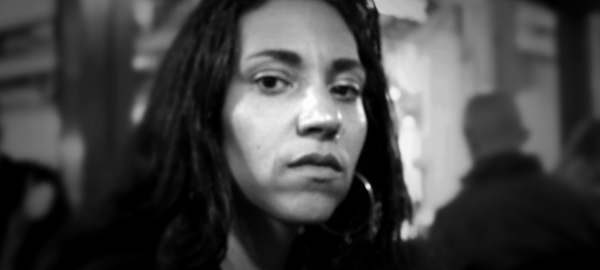
Interview with Kristina Kay Robinson
Kristina Kay Robinson is a writer and visual artist from New Orleans, and the co-editor of Mixed Company, a collective of five women writers and one female visual artist. Robinson’s work has appeared in Guernica, The Nation and Xavier Review, and she was a guest speaker at the recent festival Internazionale a Ferrara in Northern Italy, participating on the ‘broken dream’ in the US panel, alongside Isabel Wilkerson and award-winning journalist and writer Gary Younge.
With its vibrant arts and culture scene and its rich history, New Orleans represents a pivotal guide in Robinson’s approach to writing as well as Hurricane Katrina’s social and environmental impact on the city. The hurricane’s impact on New Orleans black community, and the role of art providing collective solidarity and a safe haven, stands at the centre of Robinson’s article published in Guernica Mag, What’s old is New again.
Robinson tells Angelo Boccato what inspired the birth of Mixed Company, the challenges for black female writers and artists in the US as well as the role played by the city of New Orleans in her writer’s journey.
What can you tell us about the origins of Mixed Company and why is it important to have a collective of women writers of colour in the US today?
Mixed Company is a collective of five women writers and a visual artist based in New Orleans. There is a lack of multiplicity in the publishing industry, so usually when black women or women of colour are published, they appear alone. You are never going to see four or five women of colour in one publication. So we wanted to do something where we would appear in multiplicity with five stories and one visual story, instead of just one and having to wait a year for another story to be published because a black woman has been already published. We all knew each other and had worked together and share our work. Also a non-profit organisation called the New Orleans Loving Festival helped us to get the project together. We didn’t just want to conceive the book, but to create an art archive with installations. Although we have been published in mainstream publications, we wanted to prove that Mixed Company operate in the same spaces as other mainstream publications.
In her victory speech at last year’s Emmys, Viola Davis said that black actresses cannot compete in the drama categories because there are no roles for them in the film and TV industries. When it comes to black women writers, do you believe they face a ‘double glass ceiling’ regarding getting published?
The kind of ceiling we encounter the most is the one of time. We are all of the same age and writing range, but what happens is that if one black woman has a novel coming out, that’s the only black book you’ll see that year. Think about ZZ Packer. I love Drinking Coffee Elsewhere, but it took a long time before another collection of short stories by black women was published. As for black male writers, Ta-Nehisi Coates has Between the World and Me out, but how long are they now going to make us wait before the next one?

Kristina Kay (third from left) with the members of Mixed Company.
What is the current state of New Orleans’ literature scene post Hurricane Katrina?
New Orleans has a long history of arts, culture, literature and performance. Katrina has had a number of impacts. Firstly, there is the displacement of 100,000 Black citizens, which has certainly put a dent in the culture production. Displacement has opened the floodgates for new arrivals to the city and there is a plethora of mostly white literary upstarts, raking in grant money, in the city. However, there are people of colour who remain are very determined to reconstruct and keep alive the longstanding traditions of black and indigenous people. Mixed Company is the child of these very old traditions in a literary format. Our story is being told and erased daily, so we know in this period we have to work hard, regardless of institutional support. We are very aware that we have to leave this record behind. Katrina and the rapid gentrification taking place in New Orleans have made this work urgent, and we are trying to keep apace.
What are your future plans in terms of writing?
Mixed Company plans to keep putting work out there and hosting readings and performances in the USA and beyond. One member of our collective Addie E. Citchens recently published her novel The Fire-Starter (available on Kindle and Amazon) on the Mixed Company platform. We are very excited to help her circulate this work. I’m working on a collection of essays, poems and collages which are about New Orleans as a black republic, my experience growing up here and how this city relates to the story of the world, past and present.
What would be your advice to writers of colour in the US and in the UK, for them to get published, to find their space in the industry and to tackle the ‘glass ceiling’?
My advice is to create, create, create. It’s great to pursue traditional publishing; I still pursue it. However, operating solely within the confines of the industry is difficult. Limiting yourself kills your creativity and your artistic spirit. So it’s important to create and put your art into the world. Most of the mainstream opportunities I’ve come by happened as a result of independently putting my art out into the universe. So break down the binary between establishment and self-publishing. It’s not an either/or situation anymore, thanks to the internet. There is definitely a glass ceiling, so waiting on the approval of the establishment to publish your work means you could be waiting for an eternity. In New Orleans, and the USA generally, there is a tradition of independent black literature. These texts and journals and magazines are not published by major houses, but they have helped to change the world.