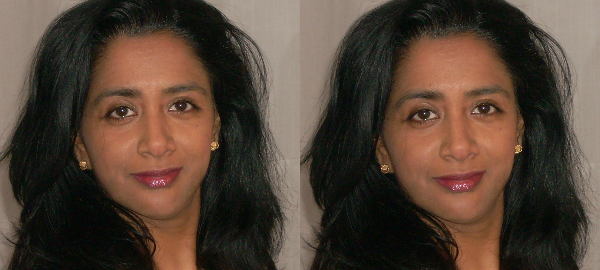
Interview with Sunny Singh
Sunny Singh is an academic, novelist and activist with a prolific presence online. Born in Varanasi, India, she graduated from Brandeis University, Waltham, Massachusetts, in 1990 with a degree in English and American Literature. She has a Masters degree in Spanish Language, Literature and Culture from the Jawaharlal Nehru University, New Delhi, and a PhD from the Universitat de Barcelona.
Now based in London, she is a senior lecturer on the BA (Hons) in Creative Writing at London Metropolitan University, and has helped shaped the creative minds of some this country’s most exciting young writers, such as acclaimed poet Warsan Shire and playwrights Matilda Ibini and Roxanna Donald. An expert on Bollywood, the British Film Institute has commissioned her to write a book on leading Indian film actor Amitabh Bachchan. In 2003, her debut novel, Nani’s Book of Suicides, won the Mar De Letras Prize in Spain while her third novel, Hotel Arcadia, was published in 2015 by Quartet Books.
The newly appointed chair of The Authors’ Club talks politics, education and the challenges of being a lecturer of colour, and tells Joy Francis why it’s important to attract more black and minority ethnic and working class students to creative writing degrees.
Spread the Word’s Writing the Future report claims that universities play a key role in supporting new novelists, and that creative writing degrees are a pipeline to publishing, especially in the literary market. But it asserts that there appears to be a supply problem when it comes to black and Asian writers. Do you agree?
That’s a simplistic way of looking at it. Also, it pushes the burden back onto black and minority ethnic (BME) young people. There is a huge structural problem in academia. There are only 17 black female professors out of 18,500, and this isn’t because we are crap at our jobs. My London Metropolitan University programme [BA (Hons) in Creative Writing and English Literature] is perhaps one of the few that not only has a significant number of BME writers – male and female – but is also actively engaged in talking about issues of class, race and gender in writing, and not just about your writer’s voice. A number of my students are also working class and Northern, and have been told for centuries that their voices don’t matter, and don’t exist. We say, let’s discuss how to get this right, which means talking and writing about issues such as class, gender and race in an active, constructive, engaged and committed way.
What makes your programme so different?
Our programme is pretty unique just by its demographics. At any given point there are at least two BME writers in any cohort. When I look at a lot of other programmes, the tutors are mostly white and middle class. Our programme is taught by women, BME, working class and queer writing professionals. We have all sorts of intersections at faculty and student levels. That’s a very different constellation of support, advice and insight available to students. As Toni Morrison says, you have to create a revolution and a movement. In the first year our students take The Writer’s World module where they read writers from around the world, such as Chimamanda Ngozi Adichie, Elif Shafak and more. They produce their own writing and discuss how books are being written to reflect other realities, not just what they see on TV. Many students have said they didn’t know books like these existed, which is a shameful commentary on the British education system. In the second year we do a research and ethics module which teaches them research techniques and how to critically look at the material they are engaging with. And in year three one of the English Literature modules extends to creative writing and the question of why literature matters. They are not expected to take the straight white man as their narrative [benchmark]. And we do exercises on writing race, class, gender and sexuality, and we discuss the consequences in text and real life when you don’t engage with that clearly.
Many of London’s universities’ creative writing programmes show an under-representation of students of colour, ranging from 16 per cent to 35 per cent on undergraduate courses. Why do you think this is?
Due to the university’s history, the programme and the people it serves, we tend to get a higher percentage of BME students overall, but the creative writing programme attracts a lot of BME women. That is something I have wondered about. I have noticed that young BME men are at a greater risk of dropping out of the programme. I wonder if this is due to greater outside pressures. Many of my students are working three jobs while putting themselves through university and, at times, they are also carers for family members – and often it can get too much. At the same time, and despite the pressures, I see black women students who are some of the most tenacious and talented, and who will draw blood from a stone to produce work. We do have a very small percentage of Asian students; I am not sure exactly why more don’t apply, but the students we do get are just amazing. Now, of course, we have the issue of the fees, which is an additional challenge.
Your programme has had some high profile graduates, including Warsan Shire, the first Young Poet Laureate for London and winner of Brunel University’s African Poetry Prize whose poetry is featured in Beyonce’s visual album Lemonade. Who else is making their mark and what is making the difference?
It’s about access to the right support network, which a lot of traditional students have access to. One of our graduates Matilda Ibini was Soho’s BBC Writersroom 10 Playwrights in Residence 2014-15, and won the Albert Fagon Audience Award for her play Muscovado. She is an extraordinary talent. She recently secured a BAFTA and Warner Bros scholarship to do an MA in Playwriting and Screenwriting at City University – and she is only 23 years old. Roxanna Donald is another graduate whose play Spike came out last year, which is based on her final year undergraduate project. A young man, Sandy Nicholson, was nominated by the International Emmys Foundation for the 2013 Sir Peter Ustinov Award. He and another of our graduates, Will Scothern, run Box Room Films, a small production company which reaches out to new scriptwriters. They have an online relationship series and have just released a short film backed by Women’s Aid on the impact of domestic violence when a relationship breaks downs. As for Warsan Shire, she worked closely with my colleague and poetry tutor Sarah Law, and is very hardworking and driven. It’s however telling that Warsan is no longer located in Britain and seems to be now based in the US. It says poor things about this country that young people with huge talent feel they have to leave.
Being a lecturer of colour in this field is rare. Research shows that students believe that having a lecturer of colour makes a huge psychological difference to them. Have your students expressed that to you?
There are positives and negatives. The one thing that does happen is a sort of disrespect, with a challenging of my credentials. This doesn’t tend to come from BME students, but it is there, like ‘what would you know?’ It can be a point of stress as going into class means wearing psychological armour because you know that someone may decide that because of your gender and/or your race, you don’t deserve to be there. But this is counterbalanced by having first year students stunned into silence when they first see you, especially the BME women. There is a sense of recognition, familiarity and comfort as they then feel there are things they can talk about freely. And that’s important.
What do you think has to change to attract a wider variety of students to creative writing programmes?
A good starting point would be to stop wrecking our education system. Since 2010 there has been an adoption of policies, inspired by US education in the 1980s, which are destroying the sector with their neo-liberal model of universities. The repercussions are higher fees, which are especially impacting BME, working class and Northern students, many of whom are the first in their family to go to university. Fees will now exceed £9,000 a year, so people who don’t have the cultural capital, but desperately want to be a writer, are getting the message that it is a waste of time. Instead, they should go into accounting, for example. It is also about the push for employability at the expense of critical thinking, which is worrying.
You have also helped to set up a new writing prize.
Yes, it’s the Jhalak Prize For Book Of The Year By A Writer Of Colour, which I set up with Nikesh Shukla and Media Diversified, with support from The Authors’ Club and a prize donated by an anonymous benefactor. It will be an annual award for the best book by British/British resident BAME writers with a cash prize of £1,000 for the winner. The prize will accept entries published in the UK in 2016 by a writer of colour. This includes fiction, non-fiction, short story, graphic novel, poetry, children’s books, YA, teen and all genres. The prize is also open to self-published writers. The aim is the find the best writers of colour in the country.
Find out more about Sunny Singh’s work at London Metropolitan University and The Jhalak Prize.