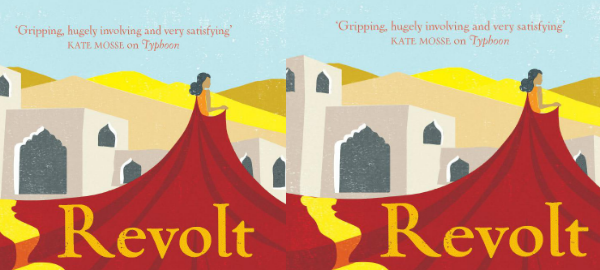
Revolt
Book: Revolt
Author: Qaisra Shahraz
Publisher: Arcadia Books
Review by Natalie Gormally
Revolt is a multi-layered, multi-faceted story of love, loss, intergenerational conflict, culture and tradition.
The book centres on three sisters, Gulbahar, Rani and Mehreen, all wealthy landowners in the fictional Pakistani village of Gulistan. Despite having extensive riches and gold, their personal lives are propelled into upheaval, initially trigged by their children’s “dishonourable” actions.
Trouble brews when Laila, Gulbahar’s daughter, elopes with the lower caste potter’s son when it had been arranged for her to marry another man deemed more appropriate to her family’s status.
Laila’s actions are seen as casting immense shame on her family. Her parents are unforgiving as they ban her from their life. Her efforts to reconnect with them are repeatedly ignored. Behind closed doors her parents are mere shadows of their former selves, trapped in their self-imposed grief. This act alienates their worldly son Arslan who deeply resents being cut off from his beloved sister.
After some years the family’s troubles are re-ignited with the return of Mehreen’s son, Ismail. After working in England, he was expected to return to Pakistan and marry his cousin Saher. Instead they are greeted with the arrival of Daniela, Ismail’s white English wife who he had secretly married. Once again the family is plunged into further scandal, creating conflict between the sisters’ families, much to the entertainment of the whole village.
Amid all the commotion, further suspicions and resentments emerge. This emotionally tangled tale plays itself out through numerous interwoven stories involving the sisters, cousins, servants and village folk. Instead of acceptance and reconciliation there are generational and cultural differences between Pakistani Muslim values and that of the modern West. The presence of many obstinate characters means resolution doesn’t come easily. Interestingly, it is the younger characters who are more at ease with change, forgiveness and widening their worldview.
Revolt has an extensive cast list and feels long for a novel which takes place such over a short time span. At first this occasionally makes the narrative difficult to follow. But Shahraz gradually justifies its length by exploring every relationship with skill, artfully fleshing out her characters, even the peripheral ones, such as the gossipmonger laundry woman Masi Fiza, loyal housekeeper Begum and the fiery quilt-maker Zeinab.
Through their stories Shahraz explores the serious problems and consequences generated by the entrenched caste and class systems and the ingrained cross cultural racism. Her message is clear – no matter what your race, gender, class or living situation, we are all equal and driven by family and love. Prejudices only ever cause problems.
However, with this attention to character detail comes a reliance on exposition, which means that the dialogue isn’t always as strong as it could be. The array of traditional terms scattered throughout the book, while referenced, sometimes interrupts the flow as a reader.
Shahraz has talked about how her work is influenced by her own experiences as a Muslim woman, and of those around her. Her emotional connection to the story is evident and makes the novel feel relevant and human.
Despite some of the distractions, Revolt is an absorbing adventure from a writer with a real passion, and a gift, for storytelling.