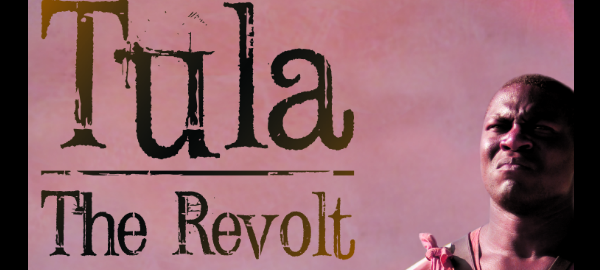
Tula: The Revolt
Slave uprising: Tula led a revolt against his Dutch colonisers.
Film: Tula: The Revolt
Cinema:: The Dutch Centre
Director: Jeroen Leinders
Screenplay: Curtis Holt Hawkins and Jeroen Leinders
Review by Patsy Antoine
Slave narratives are numerous in film, but less so are stories of the heroes that fought back and led uprisings against the colonists who enslaved them.
Hollywood’s token contribution was the hugely successful Amistad, but there are other lesser known movies, including Sankofa, Quilombo and the controversial 1958 Tamango starring Dorothy Dandridge.
Released at a time when audiences were ill-prepared for an onscreen interracial relationship between a slave woman and her master, Tamango was quickly buried. More recently, actor Danny Glover has worked tirelessly to get Touissant, his film of the famous Haitian revolt, brought to cinema audiences – still without success. There are, it seems, difficulties in telling these stories.
Which is why Dutchman Jeroen Leinders’ film, which received its first UK screening at The Dutch Centre in London, is important from a historical perspective. It charts the series of events in 1795 in Curacao when a revolt was initiated by the film’s namesake.
Growing up on the island, Leinders knew nothing of this chapter in the country’s history. But hearing the story as an adult through Dutch historians, he was determined to tell the story from the slaves’ perspective, which led to his book of the same name, published by HopeRoad.
The result is Tula: The Revolt. Learning that slaves in the neighbouring French colonies have been freed, Tula is spurred on to lead a non-violent revolt, insisting on an audience with the governor to ask for all slaves to be freed.
Soon many of the slaves on the island join him, but as days turn into weeks the peaceful revolt turns bloody. Eventually, Tula is betrayed by one of his fellow slaves and is publicly executed.
Danny Glover offers a respectable performance as the elderly slave Shinshi. Obi Abili is acceptable as Tula and newcomer Natalie Simpson is convincing as his love interest Speranza. But their love story does feel a little contrived. There are snatches of humour that attempt to lighten the tone, but this doesn’t sit comfortably within the film’s overall context.
Leinders says he made a conscious decision not to weigh the story down with gratuitous scenes of violence, so often seen in slave movies. It’s a choice that helps to focus the movie’s narrative on the retelling of the revolt and is, overall, a good move. However, without any real accounts from the slaves’ perspective the resulting narrative ends up feeling rather thin.
Then there’s the mishmash of accents, with some cast members more masterful than others, along with scene transitions that jar a little in places. These elements aside, the importance of this story in the history of Curacao cannot be ignored.
Although slavery wasn’t abolished on Curacao until 68 years after Tula’s death, the treatment of slaves improved as a direct result of the uprisings with slave owners agreeing to honour the Negro Code – rules set out to determine the correct treatment of slaves.
Despite the film’s faults, there is enough here to warrant a look. It’s still better that Tula’s story is told – and a more comprehensive history of the island is acknowledged – than not to be told at all.
The book Tula: The Revolt is available at www.hoperoadpublishing.com.