Two perspectives on Looking for Love
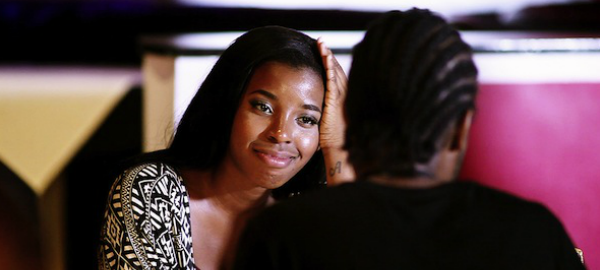
Looking for Love is the latest documentary from award-winning filmmaker Menelik Shabazz. The director of films as diverse as Burning an Illusion to the extremely popular The Story of Lover’s Rock, decided to put love and romance in the Black British community centre stage in his latest production.
Featuring spoken word artists, therapists, comedians, journalists and activists, alongside real and raw discussions among black people (young and old), the film uses its two hours to explore why love appears to be so elusive in black communities.
We invited two people, Lwam Tesfay (27) and Mahalia Changlee (18) to preview the film, give their opinion on whether the vast topic was well handled, and to share how they feel about the whole issue of Black Britons and relationships.
Lwam Tesfay

Looking for Love, by award-winning director Menelik Shabazz, is a feature length documentary highlighting both the personal and collective experiences of love, relationships and intimacy among Black Britons today. It attempts to explore the question of ‘why are there so many single black people across the UK?’
With an acute talent for storytelling, Shabazz draws out personal anecdotes and heartfelt truths from a broad range of men and women, including popular comedians, wellbeing professionals and ‘everyday people’.
I was cautious before watching the film as the title Looking for Love came across as problematic. I expected the film to pathologise the Black British experience as one that is characterised by failed relationships, broken families, absent fathers and rebellious youth.
The film does explore these difficult themes but, surprisingly, not entirely in a way that is deterministic and negative. Rather, the film is light-hearted yet reflective, and emphasises the lived and honest experiences of the interviewees.
Shabazz does point out these themes are not “black issues” per se, however the film could be regarded as a framed conversation on love, intimacy and male to female relationships as experienced by some Black Britons today.
Some of the interviewees include relationship experts, counsellors and psychologists, such as the controversial Dr Umar Johnson, who describes how “unmet emotional needs from childhood” resonate into adulthood. Spiritual healers also draw a connection to the history of the black Diaspora, raising a sticky discussion on intergenerational trauma.
The best part of watching the film is that you feel like you’re in a room, with men and women – from teenagers to senior citizens – discussing and sharing their experiences of interpersonal relationships. One minute you’re laughing with comedian Andi Osho while she describes her dating experiences. The next, you want to give her a high-five for being so brutally honest.
Throughout the film, you quickly build a rapport with the interviewees; Shabazz does a great job in connecting the audience to the characters in the film. After the two hours, not only do you feel like you’ve been introduced to new people, but that they’ve shared a part of themselves that we as human beings usually want to hide. This inevitably makes you understand how powerful sharing experiences can be, and the film urges the viewer to reflect on their own ways of thinking.
Having admittedly never watched a film by Shabazz before, I enjoyed the documentary. Personally, I love hearing people tell their stories, but the topic is so broad and complex that the density of the film is difficult to digest as a viewer. The creative interludes, such as performance poetry and dance, further complicate the film.
While there are multiple experiences included in the documentary, it doesn’t highlight all sections of what is contestably defined as the Black British community. However despite these drawbacks, the film throws out some of the big questions on love, and opens a discussion on the possibility of rethinking everything we’ve been taught about male-female relationships.
Lwam Tesfay, 27, is Words of Colour’s online editor intern and is applying to do a PhD on the lived experiences of seeking asylum in the UK.
Mahalia Changlee

Looking for Love, a documentary by Menelik Shabazz, is a good film which focuses on Black British (particularly African and Caribbean) relationship experiences and history.
Although a comforting sequel to The Story of Lover’s Rock, Looking for Love doesn’t fulfil the expectations set by its predecessor. What it does is present an unfair generalisation of the Black British experience and fails to mention the key pressures facing black women, such as unreplicable beauty standards.
The film opens at Notting Hill Carnival. Men, women and children are dancing in a sexually provocative way. Loud music is blaring and the revellers are no longer constrained by English conservatism. The colourful, lively scene shows the varied experience of Caribbean culture in Britain.
This scene also shows that despite being an open and loving culture, many Caribbean people are finding it increasingly difficult to find love, especially black women who seem constrained to singledom.
Looking for Love attempts to explore the intricate and complex notion of love among black adults and how this has been moulded from childhood, but it also focuses on young adults’ experiences and exploration of love and romance.
Yet Shabazz’s decision to open the film at Notting Hill Carnival seems misplaced, inferring that this is the way love is now understood. But it is important to stress that young people are able to distinguish between the world of carnival, where intimacy is part of the event, and the concept of love, which carries an entirely different set of emotions, responses and actions. This is not made clear during the early discussion and sets up a range of misinterpretations.
The documentary analyses the role and impact of internet dating on black relationships, suggesting that it has given black professionals a chance to find love later in life. Highlighting how the internet has changed the nature of love between men and women is an interesting one, which makes the film feel like it is taking a modern snapshot of love in practice.
Shabazz also highlights the pressures on black families during slavery. While it is important to explore the impact of slavery on the modern black experience, the omission of phenomena such as shadism and skin lightening products is a strange one. They continue to alter the beauty standard for black women and how they see themselves.
It is often noted how slavery has skewed the concept of masculinity in Caribbean culture. Yet shadism is also a legacy of slavery and plays a prolific part in the experience of growing up black and female in the UK. Its omission overlooks a major factor in how black people look for love, especially for a younger audience.
Is Looking for Love interesting? Yes. Is it stimulating? Yes. Is Looking for Love groundbreaking? No. It doesn’t add to what is already known about race and gender in the UK. It simply provides an exploration of those themes.
For those who know and like Shabazz’s work, Looking for Love is a good film but, for me, it doesn’t fully cover what love really means for the Black British community, especially women and young people.
Mahalia Changlee is an 18 year old student studying for a BSc in Anthropology at University College London and reviews young adult fiction books for Words of Colour online.